Start Karate
WIKF Northern Ireland teaches traditional Wado Ryu karate at clubs in Belfast, Downpatrick, Newtownards, Comber, and Bangor. New students are welcome at every club. This page covers what to expect when you or your child starts training.
Who Can Train
Each club has its own age policy. As a guide:
- Queen’s Wado Ryu Club, Belfast — adults aged 18 and over, with or without experience.
- Downpatrick Karate — juniors and seniors, with separate classes for each.
- ABC Karate Club (Newtownards, Comber, Bangor) — all ages and experience levels.
See the Clubs page for the full schedule and a contact route for each club.
Benefits of Karate
Karate is a lifelong discipline. The benefits build gradually with regular training and apply equally to children and adults, though the emphasis differs at different stages of life.
For Children
- Concentration and focus — classes are structured around precise repetition, which trains attention.
- Respect and etiquette — bowing, addressing instructors and partners properly, and keeping the dojo tidy are core to every class.
- Self-discipline — children learn to work patiently at something difficult, and to keep trying when it is hard.
- Coordination, balance, and posture — fundamental movement skills that transfer to other sports and daily life.
- Confidence — earned gradually through visible progress and grading milestones, not through empty praise.
- Self-defence awareness — understanding distance, awareness, and de-escalation, alongside physical technique.
For Adults
- Fitness and conditioning — kihon, kata, and partner work develop strength, mobility, and cardiovascular fitness.
- Mental focus — kata and pair work demand full attention. Many students find training a useful break from work and screens.
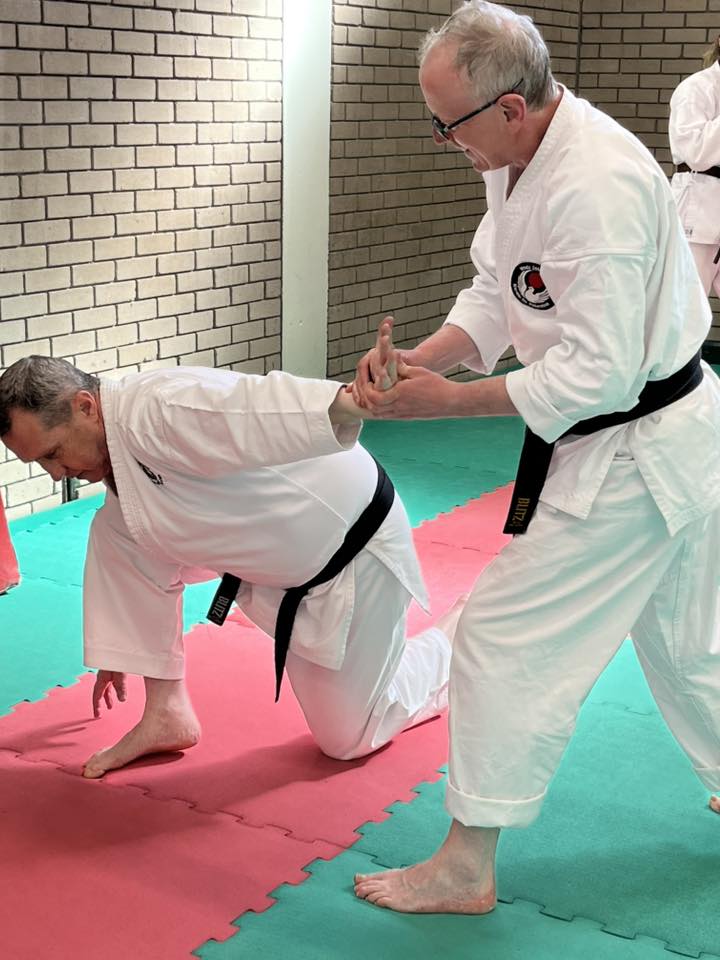
- Practical self-defence — Wado Ryu’s roots in jujutsu give the style strong principles for evasion, body shifting, and dealing with attacks at close range.
- Lifelong learning — the syllabus and kata can be studied for decades. Senior students continue to refine technique long after reaching dan grade.
- Camaraderie — clubs are small, supportive, and built around regular training partners.
- Carryover to daily life — posture, breathing, balance, and the calmness developed through regular practice all extend beyond the dojo.
What to Expect
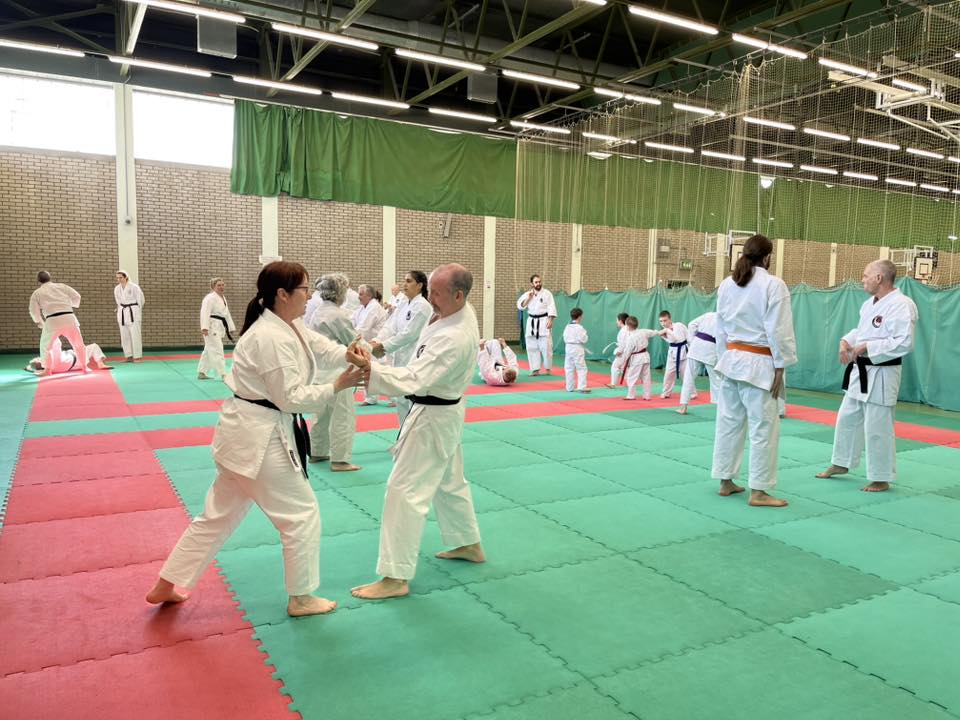
A typical Wado Ryu class includes warm up and basic conditioning, repetition of fundamental techniques (kihon), pre-arranged forms (kata), and pair work (kumite). Sessions emphasise correct technique, etiquette, and gradual development.
Wado Ryu is a traditional Japanese style with roots in jujutsu as well as karate. The emphasis is on body shifting (tai sabaki), efficient movement, and avoiding force-on-force conflict. The history section gives more background on the style and its founder.
What to Wear
For your first few classes, loose comfortable clothing is fine — a T-shirt and tracksuit bottoms or similar. Train in bare feet. Once you decide to continue, your instructor will advise on a karate suit (gi) and licensing.
You do not need to buy any equipment to start.
Fees and Licensing
Class fees are arranged through each individual club. Free training is available at Queen’s for university students.
After joining, students take out an annual licence and a grading record book. See the licensing page for details. Your instructor will guide you through this when you are ready.
How to Begin
- Pick the club closest to you.
- Use the contact route on that club’s page (phone, Facebook, or website) to introduce yourself, or simply turn up to a class a few minutes early.
- Speak to the instructor before class. They will explain how the club runs and where to stand.
For Parents
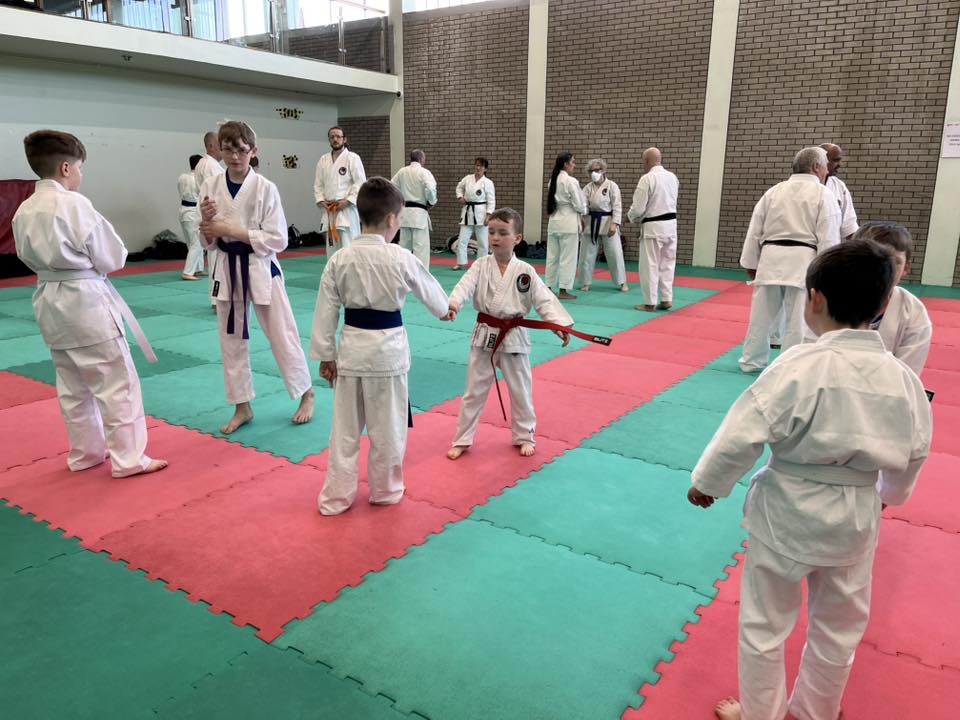
Junior classes are taught by senior dan grades with long experience teaching children. Discipline, respect, and etiquette are central to traditional karate, and these are reinforced naturally through training. Parents are welcome to watch lessons.
All WIKF Northern Ireland instructors hold current Enhanced AccessNI disclosures for working with children.